
Would you like to make your scientific computing more efficient and take full advantage of MetaCentrum’s capacity? We cordially invite you to the third webinar in the MetaCentrum webinar series, which will provide a clear overview of how MetaCentrum’s computing infrastructure and related services can be used in practice. This webinar will focus on data management and transfer. We will show you how to efficiently move large amounts of data between different disk storage systems and to scratch storage as part of computational jobs. We will also introduce the archiving and backup of valuable data using S3 object storage, both directly from MetaCentrum and from a personal computer, as well as options for sharing data within research groups.
News
Would you like to stay up to date on what’s new?
Subscribe to our newsletter and get a selection of the most important news from e-INFRA CZ, EOSC CZ, and other partner organisations. You’ll find news, upcoming events, training sessions, and webinar recordings. We send out the newsletter only 3–4 times a year, so you’ll receive only what’s truly essential—without being overwhelmed by unnecessary emails. The newsletter is in English, making it suitable for international colleagues as well.
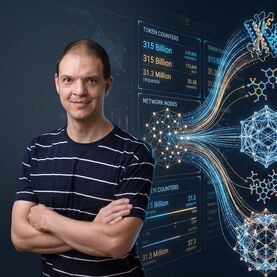
Lukáš Hejtmánek (CERIT-SC): AI Costs Can Be Tracked Token by Token. What Matters Is Knowing What We Get in Return
According to optimistic predictions, artificial intelligence was supposed to increase productivity, accelerate research, and ultimately reduce costs. Darek Šmíd’s article “AI Was Supposed to Make the World Cheaper. Instead, It Is Making Life More Expensive,” was published on WIRED.cz highlighted the other side of the current AI boom: the heavy losses reported by technology companies, rising energy consumption, the difficulty of measuring return on investment, and the true cost of using AI. We decided to examine the topic from the perspective of an academic institution that operates and uses artificial intelligence.
10th Users' Conference of IT4Innovations
The 10th IT4Innovations User Conference will take place on 5–6 November 2026 at IT4Innovations.
The event is open to all users of IT4Innovations computational resources, as well as our research and project partners.
Course: Earth observation use cases with AI
IT4Innovations and LUMI AI Factory invite you to attend the " Earth observation use cases with AI" course, which will take place online on 22 September 2026.
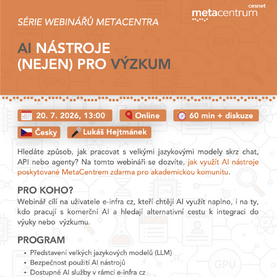
Invitation to MetaCentrum Webinar: AI Tools (Not Only) for Researchers (CERIT-SC)
Want to make your scientific computations more efficient and utilize MetaCentrum's capacity to the maximum? We cordially invite you to the second webinar of our upcoming series of online meetings. In this second installment, we will focus on the utilization of AI tools provided by the CERIT-SC Center for academic purposes.

Three Years of Feedback: How Users Help Develop e-INFRA CZ
The e-INFRA CZ computing infrastructure is about more than servers and computing power—it is about the people who rely on it every day to advance their research. Over the past three years, hundreds of researchers have shared their experiences through our user surveys. Their feedback has led to improvements in documentation, communication, technical solutions, and the services they use every day.

38th Open Access Grant Competition of IT4Innovations
Institutions can apply for computational resources on the supercomputers operated by the IT4Innovations National Supercomputing Center for non-commercial purposes through open access grant competitions. These calls are announced three times a year and are intended for employees of research, scientific, and educational organisations.

Seminar: Using Landscape Geometry and Chaos Theory to Forecast Quantum Advantage
We invite you to a "Using Landscape Geometry and Chaos Theory to Forecast Quantum Advantage" seminar, which will take place on 24 June at IT4Innovations. Online participation will also be available. The talk will be delivered by Van Binh Henri Vu from the Quantum Computing Lab at IT4Innovations.

Course: Securing GitHub & GitLab Repositories in the Era of Supply Chain Attacks and AI Agents
IT4Innovations and LUMI AI Factory invite you to attend the "Securing GitHub & GitLab Repositories in the Era of Supply Chain Attacks and AI Agents" course, which will take place online on June 30, 2026.

MetaCentrum Launches a New Series of Online Webinars for Researchers
Looking to optimize your scientific computing and get the most out of MetaCentrum? Join our introductory online webinar on June 23, 2026, launching our brand-new series. Whether you're a complete beginner or a seasoned user, in just one hour you'll get a comprehensive overview of core services, interactive platforms like OnDemand and Galaxy, and available AI tools.

Join the MetaCentrum Ambassador Program
We are looking for experienced users who want to help their colleagues and students utilize MetaCentrum's computing and data resources, and who would like to become our ambassadors at their home institutions—helping colleagues and students get started, raising awareness of e-infrastructure services, and becoming part of an active support network.

Course: Introduction to HPC
IT4Innovations and the National Competence Centre in HPC invite you to the online course “Introduction to HPC”, taking place on 3–5 June 2026.

AlphaFind: a new generation of the similar-protein-structure search engine from CERIT-SC
The CERIT-SC Centre, an integral part of the national e-infrastructure e-INFRA CZ, has launched the second generation of AlphaFind. This fast and reliable tool for discovering similar protein structures combines massive datasets with advanced machine learning and high-performance computing power. The service is fully and freely available to the wider scientific community.

Czechia Becomes a Key Pillar of European Data Infrastructure: The EOSC CZ National Node
Czech science is strengthening its position on the digital map of Europe. The e-INFRA CZ consortium—comprising CESNET, the CERIT-SC center at Masaryk University, and the IT4Innovations supercomputing center at VŠB – Technical University of Ostrava—has successfully applied for the second wave of the EOSC Federation (European Open Science Cloud).
The establishment of an independent Czech node (EOSC CZ Node) confirms that Czech e-infrastructure is no longer an "isolated island," but rather an integral part of the European research area.

National LLM Service Hosted at CERIT-SC Crosses 100 Billion Processed Tokens Milestone
The national service for operating large language models, run by CERIT-SC under e-INFRA CZ, has reached a significant milestone. Since its launch, it has served more than 1,700 users from the Czech academic and research community and processed over 100 billion tokens. The service confirms its role as a key piece of national infrastructure for working with modern language models in an environment that respects data sovereignty requirements.

Course: Computational Spectroscopy: Hands-on Many-Body Calculations with the Yambo Code
MaX Centre of Excellence and the Czech National Competence Center in HPC invite you to the course Computational Spectroscopy: Hands-on Many-Body Calculations with the Yambo Code, held online on 5–7 May 2026.

QC Seminar: The Role of Symmetry in Quantum Algorithms for Many-body Systems
The Czech National Competence Center in HPC invites you to the expert seminar Quantum Computing Seminar: The Role of Symmetry in Quantum Algorithms for Many-body Systems, taking place on 29 April from 13:00 to 14:00, both online and in person at IT4Innovations.
Scientist’s Digital Passport: Why ORCID iD Adoption is Growing
As the volume of scientific publications, data, and projects continues to grow, so does the need to reliably and consistently identify and connect this information across different systems. This need is addressed by the development of persistent identifiers (PIDs), which enable the unambiguous identification of researchers, institutions, and research outputs, while establishing stable links between them. Their importance is also evident in practice within the e-infrastructure environment – since last year’s call, more than 530 users have already linked their ORCID accounts with their e-INFRA accounts. Which identifiers are most commonly used today, and how is their adoption shaping the Czech research landscape?
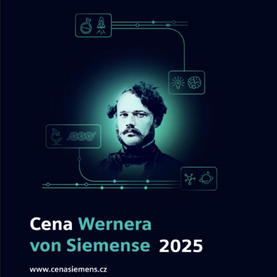
Success in Prestigious Competition: Filip Jozefov’s Master’s Thesis Succeeds in the Werner von Siemens Award
An outstanding achievement has been accomplished by Masaryk University student Filip Jozefov. With his master’s thesis, prepared under the supervision of Aleš Křenek from CERIT-SC and in collaboration with IOCB of the Czech Academy of Sciences, he reached the TOP 10 in the Best Master’s Thesis category of this year’s prestigious Werner von Siemens Award. In strong nationwide competition, he demonstrated not only exceptional quality but also a significant innovative contribution of his research.

37th OPEN ACCESS GRANT COMPETITION OF IT4INNOVATIONS
Institutions can apply for computational resources on the supercomputers operated by the IT4Innovations National Supercomputing Center for non-commercial purposes through open access grant competitions. These calls are announced three times a year (February, June, and October) and are intended for employees of research, scientific, and educational organisations.